

7 Things I Wish I Knew Before Designing My Daughter’s Play Area
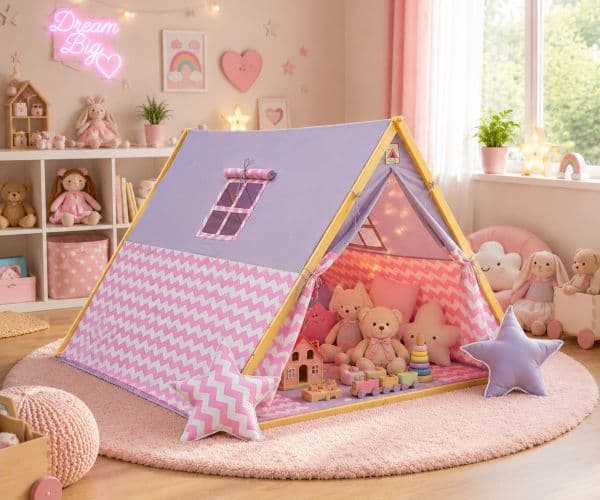
Designing my daughter’s play area sounded fun at first. I imagined a cute corner with pretty colors, a tiny tent, and a few toys scattered around. But once I started planning, I realized that I really needed some good and practical kids play area ideas for home. Also because a play area has to do much more than look beautiful, it needs to be safe, practical, easy to clean, and fun enough that a child actually wants to use it every day.
A well-designed play space works best when it has soft flooring, smart storage, open movement space, and a cozy focal point where a child can read, rest, or imagine. If I could go back and redesign my daughter’s play area from scratch, these are the seven things I wish I knew earlier.
So to make it easier for you, Iam listing some of the kids play area ideas for home.
1. Safety should come before decor
The first mistake many parents make is choosing colors, themes, and accessories before thinking about safety. In reality, the safest play spaces start with the basics: soft flooring, secure furniture, rounded corners, and child-friendly materials. Even the cutest play area can become stressful if you are constantly worrying about bumps, slips, or clutter.
For my daughter’s space, I would always begin with a cushioned base like a play mat or soft rug. I would also keep the play area away from sharp furniture edges, exposed wires, and anything heavy that could tip over.
2. A theme makes the space feel special
Children respond very well to themed spaces because themes make the room feel like their own world. Whether it is a princess corner, a unicorn nook, or a cozy tent house, a theme gives the play area personality and makes it more exciting. It also makes decorating easier because you can build around one visual idea instead of trying to mix too many styles.
For girls’ play areas, soft pink accents, fairy lights, cushions, and a teepee or tent can instantly create a magical feel. A themed tent area also gives your child a private corner for reading, pretend play, and quiet time.
3. Storage matters more than you think
A play area looks beautiful only when it stays organized. So while checking to design the play area, or kids play area ideas for home do think about keeping it clean and organised. Without storage, toys spread everywhere, the floor becomes crowded, and the room stops being enjoyable for both parents and children. Storage bins, shelves, baskets, and cubbies help keep the space tidy and teach children that cleanup is part of play.
I now believe storage should be planned into the design from the beginning, not added later. It is better to keep frequently used toys at a child-friendly height so she can access them independently and put them back without help.
4. Small spaces can still work beautifully
You do not need a huge room to create a lovely play zone. In fact, small play areas often work better because they feel cozy and intentional when designed properly. The key is to divide the space into zones, even if each zone is tiny.
A reading nook, a pretend-play corner, and a small tent area can all fit into a modest space if you use the floor well and avoid too much bulky furniture. A foldable play tent is especially useful here because it gives the child a special spot without permanently taking over the room.
5. A girls’ tent can become the heart of the room
One thing I underestimated was how much children love having a little enclosed space of their own. A well-designed girls’ tent is not just a decoration; it can become a reading corner, a pretend house, a hideout, or a calm-down space. That makes it one of the most useful items you can include in a child’s play area.
For a softer and more charming look, the Frame Tent for Girls is a beautiful choice. It adds a cozy and stylish feel to the room while giving your child a private space for imaginative play, reading, or relaxing. If you are creating a themed corner, this kind of tent can make the space feel complete.
For a more royal and playful setup, the Barbee Teepee A Princess’s Palace is a perfect fit for parents looking for a Princess Tent For Girls. It brings a fairy-tale feel to the play area and works beautifully as the main feature in a girls’ room or play corner. This kind of tent is ideal when you want both style and function in one piece.

6. Design for how your child plays, not just how you want it to look
It is easy to design a room that looks picture-perfect in photos but does not match a child’s real habits. Some children want to climb, some want to read, some want pretend tea parties, and some prefer quiet solo play. The best play areas are built around the child’s personality, energy level, and favorite activities.
For my daughter, I would now think about where she likes to sit, what she loves to do, and how long she spends in one activity. Once you understand that, the layout becomes much easier to plan and the space becomes more useful every day.
7. The play area should grow with your child
Having gone through so many kids play area ideas for home, the final thing I wish I knew is that play areas should be flexible. Children grow fast, and a room that works for a toddler may feel too babyish within a year or two. Choosing adaptable items saves time, money, and effort later.
That is why foldable tents, movable storage, soft seating, and removable decor are so helpful. They let you refresh the space without starting from zero each time your child’s interests change.
How I would design it now
If I were designing my daughter’s play area today, I would keep it simple, safe, and flexible. I would start with soft flooring, add a themed girls’ tent, use easy storage solutions, and leave enough open space for movement. I would also choose colors and accessories that feel cheerful without becoming overwhelming.
The goal is not to build the most expensive space. The goal is to create a corner where your child feels happy, independent, and comfortable enough to play, read, and imagine every day.
FAQ
What is the best tent for a girl’s play area?
A cozy girls’ teepee tent or A-frame play tent works well because it is stylish, comfortable, and useful for reading or pretend play.
How do I make a play area safe?
Use soft flooring, rounded furniture edges, secure heavy items, and child-friendly materials. Keep the area free from clutter and hazards.
Can a play tent fit in a small room?
Yes. A foldable teepee tent or lightweight play tent works very well in small spaces because it creates a dedicated play corner without taking too much room.
What are the cheap and best kids play area ideas for home?
You can buy a play mat that defines the play area and set up a teepee tent house on it. All the toys can easily fit in and around your kids tent house.