

5 Best Indoor Activities for Kids at Home
5 Best Indoor Activities for Kids at Home

Are you looking for fun indoor activities for kids at home? Something that keeps children entertained, creative, and away from screens? Whether it is a rainy afternoon, a hot summer day, a school holiday, or simply a weekend spent indoors, having a few engaging activities ready can make a big difference.
Children are naturally curious and imaginative. They love exploring, creating, pretending, discovering, and turning ordinary things into exciting adventures. The good news is that you do not need complicated toys or expensive equipment to create meaningful playtime at home. Simple screen-free activities for kids can encourage creativity, problem-solving, movement, and family bonding. From arts and crafts to treasure hunts and imaginative play, here are 5 of the best indoor activities for kids at home that are easy to organize and enjoyable for different age groups.
Why Are Indoor Activities Important for Children?
Indoor play is more than just a way to keep children busy. Well-planned activities can give kids opportunities to express themselves, use their imagination, practise problem-solving, and spend quality time with parents and siblings.
Screen-free activities can also help children discover that entertainment does not always have to come from a television, tablet, or smartphone. UNICEF, for example, recommends a variety of age-appropriate screen-free activities including storytelling, scavenger hunts, drawing, pretend play, and family games.
The key is to offer activities that feel like play rather than homework.
1. Arts & Crafts: Let Their Imagination Take Over
Arts and crafts are among the easiest indoor activities for children because you can create endless possibilities with materials you already have at home.
Give your child some paper, crayons, coloured pencils, paints, glue, cardboard, old magazines, stickers, or recyclable materials and let their imagination lead the way.
Instead of telling them exactly what to make, try giving them a creative challenge:
- Draw your dream house.
- Design your own superhero.
- Make a paper animal.
- Create a birthday card for someone special.
- Build a cardboard castle.
- Make a colourful collage.
- Design your own imaginary planet.
Why Kids Love activities?
Arts and crafts encourage children to experiment with colours, shapes, textures, and ideas. They also give children a chance to make something that is uniquely theirs.
For younger children, simple colouring, paper tearing, sticking, and finger painting can be enjoyable. Older children can try origami, DIY decorations, scrapbooking, clay modelling, or more detailed craft projects.
Parent tip: Resist the temptation to correct your child’s artwork. The goal is creativity, not perfection. Let your child decide what their creation should look like.
2. Organize an Indoor Treasure Hunt
Want an activity that gets children moving around the house while also making them think?
Try an indoor treasure hunt for kids. It is among the Best Indoor Activities for Kids at Home. You do not need elaborate preparation. Hide a few safe objects around the house and prepare simple clues that lead children from one location to another.
For example:
Clue 1: “I am cold and keep your food fresh. Look near me.”
Clue 2: “You sit here when you want to relax and read a book.”
Clue 3: “Your next clue is hiding where you keep your favourite toys.”
At the end, leave a small surprise such as a sticker sheet, colouring book, favourite snack, or handmade certificate.
Make the Treasure Hunt More Creative
You can give the activity a theme based on your child’s interests.
Try:
- Pirate treasure hunt
- Dinosaur adventure
- Princess treasure hunt
- Superhero mission
- Jungle expedition
- Detective mystery
- Space adventure
An indoor treasure hunt is particularly useful when children have lots of energy but cannot go outside. It combines movement with imagination and problem-solving.
For younger children, keep the clues simple and visual. Older children can solve riddles, count objects, follow directions, or even create their own treasure hunt for the rest of the family.
3. Create a DIY Storytelling & Puppet Show
Storytelling is another wonderful indoor activity for kids at home because it requires very little preparation and can involve the entire family.
Ask your child to choose three things:
- A character
- A place
- A problem
For example:
Character: A little elephant
Place: A magical forest
Problem: He has lost his way home.Now let your child invent the story.
You can make the activity even more exciting by creating simple puppets from paper bags, socks, cardboard, or paper cut-outs.
Once the puppets are ready, turn part of your living room into a mini theatre and put on a family puppet show.
Why Storytelling Is Great for Kids
Story-based play encourages imagination, communication, vocabulary, and creative thinking. It also gives children an opportunity to express emotions and develop confidence.
For younger children, parents can tell a story and let the child act out different characters. Older children can write their own stories and perform them for the family.
You can even create a weekly “family storytelling night” where everyone contributes one part of the story.
4. Have an Indoor Camping or Creative Building Day
Who says camping has to happen outdoors?
Transform a corner of your home into a mini adventure zone using blankets, cushions, cardboard boxes, pillows, and safe household items.
Children can create a pretend campsite, build a reading corner, make a pretend restaurant, construct a castle, or design a secret hideaway.
Add a few imaginative elements:
- Tell camping stories.
- Use flashlights for a pretend night adventure.
- Have an indoor picnic.
- Make paper binoculars.
- Read books together.
- Play “explorer.”
- Create a pretend camp menu.
- Organize a mini scavenger hunt.
Turn Building Into a Challenge
Give your child a simple mission:
“Can you build a house for your favourite teddy?”
Or:
“Can you make a castle big enough for two people?”
Open-ended building activities encourage children to experiment and solve problems independently.
This type of play is especially useful for school holidays, rainy days, or weekends when children need something different from their usual routine.
And if you want to make indoor camping a regular activity, a dedicated indoor play tent for kids can turn this temporary game into a permanent creative space.
5. Create a Magical Indoor Play Tent
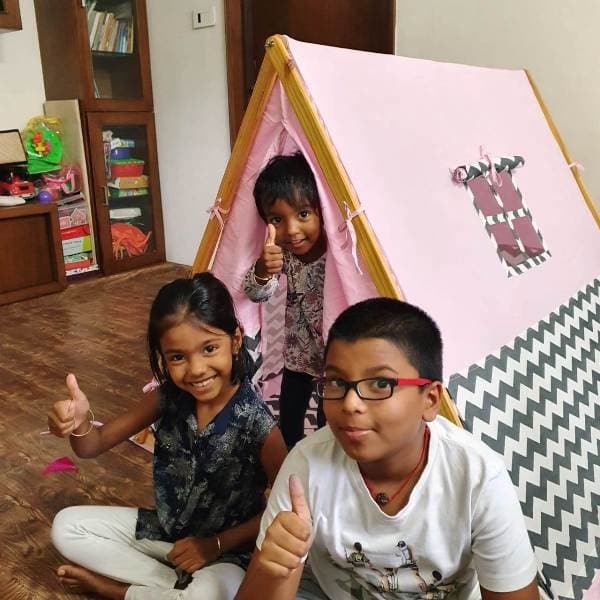
Finally, one of the most versatile indoor activities for kids is creating their own special play space with a kids play tent.
An indoor play tent can become much more than a tent. To a child, it can be a secret clubhouse, reading corner, camping shelter, princess palace, superhero headquarters, puppet theatre, or imaginary world.
This is why a play tent can become a wonderful addition to a child’s room or indoor play area.
Fun Things Kids Can Do Inside a Play Tent
There are countless ways to use a children’s play tent:
Reading Corner:
Add a few cushions and favourite books and create a cosy little reading nook.
Indoor Camping:
Put a sleeping bag or blanket inside and let your child enjoy a pretend camping adventure.
Pretend Play:
The tent can become a house, shop, castle, spaceship, jungle base, or anything your child imagines.
Puppet Theatre:
Use the entrance as a stage and let children create their own puppet show.
Quiet Time:
Sometimes children simply enjoy having a small personal space where they can sit, read, draw, or relax.
Playdate Fun:
A tent can also become an engaging play area when siblings or friends come over.
Camping at Home Ideas for Children


Why Children Love Having Their Own Play Space?
Children naturally enjoy having little spaces that feel like their own. A play tent gives them an environment where they can take the lead and decide what their imaginary world looks like.
For parents, it can also help create a designated kids’ play area at home without requiring an entire room.
A colourful teepee, themed tent, or personalized play tent can make the space even more special.
At Playtents, children’s tents can be used for imaginative play, indoor camping, reading, pretend adventures, and creative activities. A personalized tent with a child’s name can also make a thoughtful birthday or special-occasion gift.
Screen-Free Indoor Activities for Kids: Keep It Simple
You do not need to completely eliminate screens from your child’s life to encourage screen-free play. Instead, create attractive alternatives that make children want to put the screen down.
Keep a small activity basket ready with:
- Colouring materials
- Puzzles
- Storybooks
- Building blocks
- Craft supplies
- Board games
- Puppets
- Paper and cardboard
- Favourite toys
You can also create a simple “boredom box” filled with activity cards. Whenever your child says, “I’m bored,” let them pick one.
The goal isn’t to keep children constantly occupied. A little boredom can also encourage children to invent their own games and use their imagination.
Indoor Activities for Kids by Age
Different ages naturally require different types of play and activities.
Kids Aged 0-5
For toddlers, you can try simple activities such as colouring, stacking blocks, sensory play, picture books, music, and supervised pretend play. As they grow more towards pre-school, introduce treasure hunts, storytelling, crafts, puzzles, puppet shows, building games, and also play tents. These activities can be particularly engaging for preschool children.
Kids Aged 6-10
Try indoor camping, creative challenges, board games, DIY crafts, treasure hunts, reading, building projects, fireless cooking and imaginative tent house play.
Kids 10+ Years
Older children may enjoy more challenging puzzles, DIY projects, creative writing, cooking with an adult, strategy games, themed treasure hunts, art & craft and designing their own indoor adventures.
Always choose activities appropriate for your child’s age and supervise activities involving small objects, scissors, craft tools, or other potentially unsafe materials. You can also arrange a Teepee Sleepover party for older children.
How to Create a Fun Indoor Play Area at Home
You don’t need a large house or dedicated playroom to create an enjoyable play space.
Choose one small corner of a bedroom, living room, or family area and make it your child’s creative play zone.
You could add:
- A soft rug
- Floor cushions
- Books
- Art supplies
- Storage baskets
- Building toys
- A play tent
- A small table for crafts
Keep frequently used toys accessible and rotate activities occasionally so that familiar toys feel new again. Most importantly, allow children some freedom to decide how they want to use the space.
More Ideas for Indoor Play at Home
Once you have created a fun indoor play space for your child, there are plenty of ways to make it even more engaging. If you are considering adding a play tent to your child’s room or play area, explore our guide to the 7 Best Play Tents for Kids: How to Choose the Right One to find ideas that suit different ages, interests and types of imaginative play.
For children who love camping and adventure, our Ultimate Guide to Planning a Kids’ Glamping Sleepover at Home offers creative ideas for turning an ordinary room into an exciting indoor camping experience.
If you are looking specifically for a teepee-style tent, take a look at 5 Best Teepee Tents for Kids Bedroom Transformations for inspiration on creating a cosy and imaginative space in your child’s bedroom.
Choosing and using a play tent can be simple, but a few common mistakes can affect the experience. Our guide to 7 Kids Play Tent Mistakes Every Parent Makes shares practical tips to help parents choose and set up a play tent thoughtfully.
A play tent can also help create a dedicated space for toys, reading and imaginative play. For practical ideas on keeping children’s rooms organized, read The 5-Minute Bedroom Clean-Up: How a Foldable Play Tent Helps Manage Toy Clutter.
Frequently Asked Questions
What are the best indoor activities for kids?
Some of the best indoor activities for kids include arts and crafts, treasure hunts, storytelling, building games, indoor camping, reading, board games, pretend play, and play tent activities.
What are some screen-free activities for kids at home?
Children can enjoy drawing, crafts, puzzles, reading, treasure hunts, puppet shows, storytelling, building activities, indoor camping, and imaginative play without using screens.
How can I keep my child busy indoors during summer?
During hot summer days, create a mix of quiet and active indoor activities such as crafts, treasure hunts, indoor camping, storytelling, puzzles, and imaginative play inside a kids’ play tent.
What are some indoor activities for kids on rainy days?
Indoor activities such as arts and crafts, treasure hunts, storytelling, puppet shows, building games, indoor camping and imaginative play can keep children engaged on rainy days.
What can I put inside an indoor play tent?
You can add cushions, blankets, books, soft toys, small pillows, and age-appropriate toys. Depending on the activity, it can become a reading nook, camping space, pretend-play area, or puppet theatre.
How are play tents good for children?
A play tent can provide a dedicated space for imaginative and pretend play. Children can use it for storytelling, reading, indoor camping, creative games, and quiet time. It can also act like an excellent Toy Organiser in your child’s room.
Are kids tents made in India?
Yes. Several companies manufacture children’s tents in India. PlayTents is an Indian brand offering children’s tents made with breathable cotton fabric and eco-friendly bamboo poles.


Make Indoor Play More Magical
The best indoor activities for kids at home don’t have to be complicated. Sometimes a few crayons, a handful of clues, a good story, or a cosy little tent can create hours of imaginative play. From arts and crafts to treasure hunts, storytelling, indoor camping, and play tents, these activities can help children explore their creativity while giving families opportunities to spend meaningful time together. And perhaps the best part is that you don’t have to wait for a rainy day to try them.
Create a small creative corner, put away the screens for a while, and let your child’s imagination take over. You may be surprised by just how much fun can happen inside your own home.